Bike Loans Australia Vehicle Lease Repayment Calculator
Use this calculator to calculate the monthly lease payments for a motor vehicle. Compare various car leasing interest rates, loan terms and residual/balloon payments.
Calculator results are estimates based on the inputs and assumptions used and are for general information only. They are not quotes, offers, approvals, eligibility decisions or personalised recommendations, and do not indicate that a lender will provide credit. Actual repayments and costs may differ.
Car Lease Details:
Important!
Car Lease Interest Rates differ from lender to lender and will depend on your individual circumstances (credit history, employment status, age, etc.).
Car Lease Amortisation Calculator
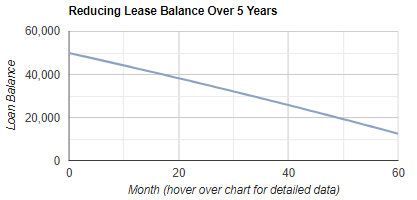
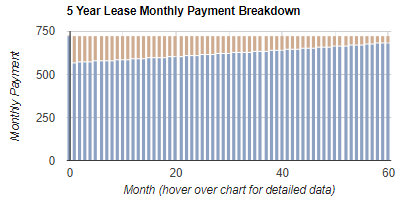
The following amortisation graphs detail month-by-month data on the progress of the proposed loan. The first chart below examines the reducing loan balance over the course of the finance contract term. The second graph illustrates the portion of each monthly repayment allocated to payment of interest vs principal reduction.
How to use our Vehicle Lease Repayment Calculator
Our Vehicle Lease Repayment Calculator helps you estimate monthly lease repayments for a motor vehicle by modelling three key variables: interest rate, lease term, and the residual or balloon amount payable at the end. It’s important because small changes to any of these inputs can materially affect cash flow, total interest over the term, and the end-of-lease obligation, helping you compare scenarios before you speak with a lender or novated leasing provider.
How to complete the form for the best result:
1. Purchase Price
Enter the total amount you want financed for the vehicle. Include relevant upfront costs you intend to roll into the lease (for example, on-road costs or insurance where applicable). Use whole numbers only (no decimals, commas, or dots).
2. Balloon or Residual Value (percent of purchase price)
Select the residual percentage. A higher residual generally reduces the monthly payment but increases the amount left owing at the end, which can increase overall cost across the term. Choose a residual that matches your intended end-of-lease plan (keep, refinance, or sell).
3. Term of Loan (years)
Choose the number of years. Longer terms usually reduce monthly repayments but can increase total interest paid. Select a term that suits how long you expect to keep the vehicle and your budget tolerance.
4. Interest Rate (per annum)
Select an interest rate to simulate. Use a conservative rate when stress-testing affordability, because your actual rate may differ depending on lender policy and your circumstances.
5. Calculate
Click calculate to generate your estimated monthly lease repayment and amortisation visuals.
How to interpret the results:
1. Monthly repayment estimate: Use this as a budgeting guide and compare scenarios by adjusting term, rate, and residual.
2. Amortisation charts: Review how the balance reduces over time and how much of each payment is interest versus principal; this highlights when interest costs are highest and the impact of a larger residual.
ASIC compliance note: This guide is general information only and does not consider your objectives, financial situation or needs. Consider the full lease contract, fees, taxes, insurance, maintenance, and end-of-lease options before deciding, and consider getting personal advice if needed.
Feeling the wind rushing past you as you glide down the open road, with the growl of the engine as your soundtrack – the thrill of motorcycle ownership is a unique blend of freedom, excitement, and passion. In Australia, where the vistas are as captivating as the sense of adventure, owning a motorcycle is not just about transportation; it's a way to experience the landscape to its fullest. - read more
The importance of motorcycle maintenance cannot be understated, especially when faced with the unique and shifting weather conditions that span our vast continent. From the scorching heat of the Outback to the wet and windy coastline, traversing Australia on two wheels requires your machine to be as adaptable as you are. - read more
Motorbikes are becoming an increasingly popular mode of transport across Australia. Whether it's the allure of the open road, the convenience of easy parking, or the thrill of riding, more Australians are opting for two wheels over four. This surge in popularity brings with it the need for effective financial planning, especially for those considering purchasing a motorbike through a loan. - read more
Welcome to the exhilarating world of motorcycle riding. Whether you're a seasoned rider or just getting started, there's something uniquely thrilling about hitting the open road on two wheels. - read more
The latest national lending indicators give motorcycle buyers another useful signal: Australians are still willing to finance vehicles, but the decision is increasingly being shaped by repayment comfort rather than headline purchase price alone. - read more
Fresh September personal loan comparisons are a useful checkpoint for Australian riders planning to finance a new or used motorcycle. While headline interest rates remain an obvious starting point, the latest market settings continue to show why borrowers should look beyond the most attractive advertised number before making a decision. - read more
Fresh national economic figures have given Australian borrowers another reason to stay practical when planning a motorcycle purchase. While the latest growth signals suggest the economy is still moving forward, they also reinforce a familiar message for riders: finance conditions can remain uneven even when broader market confidence improves. - read more
The Reserve Bank’s latest policy commentary has reinforced a message that matters for Australian motorcycle buyers: borrowing conditions may be steadier than they were during the sharpest phase of rate rises, but that does not automatically translate into cheaper bike finance. Inflation, household spending, wages and employment data remain central to the rate outlook, and lenders are still pricing personal credit according to their own funding costs, appetite for risk and borrower assessment settings. - read more