The information on this website is general in nature and does not take into account your objectives, financial situation, or needs. Consider seeking personal advice from a licensed adviser before acting on any information.
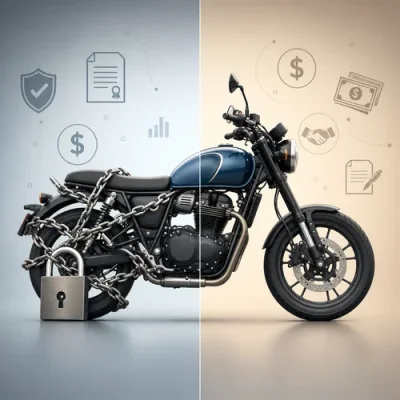
Choosing between a secured and unsecured motorcycle loan can affect your interest rate, borrowing limit, repayment term, approval process and risk if repayments become difficult. This guide compares the two loan types for Australian riders so you can better understand how each option works before reviewing loan offers.
Secured vs unsecured motorcycle loans: the core difference
Motorcycle loans in Australia are commonly structured as either secured or unsecured finance. The main difference is whether an asset is used as collateral for the loan.
A secured motorcycle loan is backed by collateral, usually the motorcycle being purchased. The lender holds a security interest in the bike until the loan is repaid in full. If the borrower defaults, the lender may have the right to repossess the motorcycle under the loan agreement.
An unsecured motorcycle loan does not require the motorcycle, or another asset, to be pledged as collateral. Instead, the lender places more weight on the borrower's creditworthiness, income and overall financial position when assessing the application.
Neither option is automatically better. Secured loans often provide lower rates, higher borrowing limits and longer terms, but they carry repossession risk. Unsecured loans can be simpler and faster to arrange, but they often have higher rates, lower limits and stricter eligibility criteria.
Quick comparison: secured and unsecured motorcycle loans
| Feature |
Secured motorcycle loan |
Unsecured motorcycle loan |
| Collateral |
Usually secured against the motorcycle being financed. |
No motorcycle or other asset is pledged as security. |
| Repossession risk |
The lender may repossess the motorcycle if repayments are not met. |
The motorcycle is not used as collateral, so there is no direct secured-loan repossession risk for that bike. |
| Interest rates |
Generally lower because the lender has collateral to reduce risk. |
Often higher because the lender has no asset security. |
| Borrowing limits |
May allow higher borrowing limits, depending on the bike value and the borrower's financial position. |
Often lower, with the amount more heavily based on income, credit history and lending criteria. |
| Repayment terms |
May offer longer repayment terms, which can reduce monthly repayments but may increase total interest over time. |
Often shorter repayment terms, which may mean higher monthly repayments. |
| Application process |
Can involve more paperwork because the lender assesses the motorcycle and loan security. |
Can be simpler because there is no collateral valuation step. |
| Approval timing |
May take longer due to vehicle checks and security documentation. |
May be faster because assessment focuses on the borrower rather than the asset. |
What is a secured motorcycle loan?
A secured motorcycle loan is a loan where the borrower pledges an asset to the lender. In most motorcycle finance arrangements, the collateral is the motorcycle being purchased. The lender's security interest remains in place until the loan is fully repaid.
Because the loan is backed by an asset, the lender has an added layer of protection. This is why secured loans commonly offer more competitive interest rates and higher borrowing limits than unsecured loans. However, that benefit comes with a serious trade-off: if repayments are not made, the lender may be able to reclaim the motorcycle.
How collateral works
Collateral gives the lender rights over the secured asset if the borrower defaults. For a motorcycle loan, this usually means the lender can take steps to repossess the bike if the borrower does not meet the agreed repayment obligations.
Borrowers should read the loan terms carefully so they understand what counts as default, what fees may apply, and what options may be available if repayment difficulty arises. For a deeper look at contract terms, see this guide on what to look for in a motorcycle loan agreement.
Typical secured loan application process
Applying for a secured motorcycle loan usually involves details about both the borrower and the motorcycle. The lender may ask for identification, proof of income, information about existing debts and details of the motorcycle, such as purchase documentation, vehicle identification information and other specifications needed to assess the asset.
Because the lender must consider the borrower's creditworthiness and the motorcycle's value, secured loan applications can involve more documentation and may take longer than unsecured applications.
Pros of secured motorcycle loans
Lower interest rates
Secured motorcycle loans generally have lower interest rates than comparable unsecured loans. The motorcycle acts as collateral, which reduces lender risk and can result in more favourable pricing for eligible borrowers.
Higher borrowing limits
Secured loans may allow a borrower to access a higher loan amount than an unsecured loan. This can matter when buying a more expensive motorcycle or when considering related purchase costs such as insurance or accessories. Borrowing limits still depend on lender criteria, the bike's value and the borrower's capacity to repay.
Possibility of longer repayment terms
Secured finance may offer longer repayment terms. A longer term can reduce the size of each regular repayment, which may help with monthly budgeting. However, spreading repayments over a longer period can also increase the total interest paid over the life of the loan.
Cons of secured motorcycle loans
Risk of repossession
The most important drawback of a secured motorcycle loan is repossession risk. If the borrower cannot meet the repayment obligations, the lender may be able to reclaim the motorcycle because it is the secured asset.
This risk should be considered carefully, especially if the bike is needed for commuting or daily transport. A lower interest rate may not be worth the stress of taking on repayments that leave little room for unexpected expenses.
More complex application requirements
Secured loan applications can involve extra paperwork because the lender must assess the motorcycle as well as the borrower. This may include proof of purchase, vehicle details and information that helps confirm the bike's value.
Potentially longer approval times
Because the lender needs to review collateral details and security documentation, approval may take longer than an unsecured loan. This may be relevant if a borrower is trying to move quickly on a particular motorcycle purchase.
What is an unsecured motorcycle loan?
An unsecured motorcycle loan does not require the borrower to offer the motorcycle or another asset as collateral. The lender assesses the borrower's credit history, income and financial position to decide whether to approve the loan and what terms to offer.
Because there is no secured asset backing the loan, lenders often price unsecured loans at higher interest rates. Borrowers may also face stricter eligibility criteria, lower borrowing limits and shorter repayment terms.
No collateral required
The defining feature of an unsecured loan is that the motorcycle is not pledged to the lender. This may appeal to borrowers who do not want the bike tied to the finance arrangement or who are not purchasing a motorcycle that meets secured lending requirements.
While there is no direct repossession risk attached to the motorcycle as collateral, missed repayments can still have serious financial consequences, including fees and potential damage to credit history.
Typical unsecured loan approval process
The unsecured loan process is often simpler because there is no vehicle security assessment. Lenders commonly focus on proof of income, credit history, existing debts and overall capacity to repay.
This can make unsecured loans faster to assess, but borrowers with weaker credit profiles or limited income may find the criteria more challenging.
Pros of unsecured motorcycle loans
Faster approval and funding
Unsecured motorcycle loans can be quicker to process because the lender does not need to value or register an interest in the motorcycle. This may suit borrowers who need a simpler finance process, although timing still depends on the lender and application quality.
No motorcycle collateral
Because the motorcycle is not used as security, the borrower does not face the same secured-loan risk of losing that bike through repossession if financial difficulties arise. This can provide peace of mind for borrowers who are uncomfortable pledging the motorcycle as collateral.
Simpler paperwork
Unsecured loans usually involve fewer asset-related documents. The application generally centres on the borrower's identity, income, credit history and ability to make repayments.
Cons of unsecured motorcycle loans
Higher interest rates
Unsecured loans often carry higher interest rates than secured loans. Without collateral, the lender takes on more risk and may charge more for the loan. This can increase both the regular repayment and the total cost of borrowing.
Lower borrowing limits
Because the loan is not backed by an asset, the lender may limit how much can be borrowed. This can be an issue if the borrower wants to purchase a higher-value motorcycle or include other costs in the loan amount.
Shorter repayment terms
Unsecured motorcycle loans often have shorter repayment terms. Paying the loan off over a shorter period can reduce the time in debt, but it can also increase each repayment and place more pressure on the borrower's monthly budget.
How to choose between secured and unsecured motorcycle loans
Start with the loan amount you need
If the motorcycle is higher in value or the borrower wants to include related purchase costs, a secured loan may provide a higher borrowing limit. If the amount needed is modest, an unsecured loan may be enough, provided the borrower meets the lender's criteria.
Consider your current financial position
Credit score, income stability, existing debts and regular expenses all influence loan assessment and repayment comfort. A borrower with stable income and strong credit may have more options. A borrower with less financial flexibility should pay close attention to repayment size, fees and the consequences of missed payments.
Before comparing offers, it can help to estimate repayment scenarios with a tool such as the Personal Loan Repayment Calculator. Calculators provide estimates only, but they can help illustrate how interest rates and loan terms affect regular repayments.
Think about your risk tolerance
A secured loan may provide lower costs, but it puts the motorcycle at risk if repayments are not made. An unsecured loan removes the need to pledge the motorcycle, but may cost more and provide less borrowing flexibility. The right balance depends on the borrower's comfort with collateral risk and their ability to manage repayments.
Compare total cost, not just the rate
Interest rates are important, but they are not the only cost. Application fees, service charges, early repayment fees and other loan costs can affect the overall value of an offer. A loan with a lower rate but higher fees may not always be cheaper over the full term.
Common mistakes when comparing motorcycle loans
Choosing the first offer
Different lenders can offer different rates, fees, terms and eligibility requirements. Accepting the first offer without comparison may mean missing a structure that better fits the borrower's budget or risk preferences.
Ignoring fees and fine print
Loan fees can change the overall cost of borrowing. Borrowers should check application fees, ongoing service charges, early repayment conditions and any default-related costs before signing.
Overestimating repayment ability
Motorcycle ownership can include costs beyond the loan repayment, such as insurance, maintenance and day-to-day running expenses. Borrowers should consider these alongside loan repayments. For related reading, see this guide to motorbike insurance considerations.
Focusing only on monthly repayments
A longer term can make monthly repayments look more manageable, but it may increase total interest paid over the life of the loan. A shorter term can reduce time in debt but may place more pressure on cash flow. Both the monthly repayment and the total repayment amount should be reviewed.
Bottom line
Secured and unsecured motorcycle loans serve different needs. A secured motorcycle loan may offer lower rates, higher borrowing limits and longer repayment terms, but the motorcycle is used as collateral and may be repossessed if repayments are not met.
An unsecured motorcycle loan may be simpler, faster and free from motorcycle collateral, but it often comes with higher interest rates, lower borrowing limits and shorter terms.
Before deciding, review the loan amount needed, repayment capacity, fees, loan term and comfort with collateral risk. This information is general in nature and should be considered alongside the terms of any specific loan offer.
Published: Saturday, 24th May 2025
Author: Paige Estritori



No comments yet. Be the first to share your thoughts.